
Welding (1G–6G, TIG, MIG)
PROFESSIONAL WELDING (1G–4G, 6G, TIG & MIG)
Master International Standard Welding Skills for Construction, Shipbuilding, Oil & Gas, and Industrial Fabrication
Course Overview
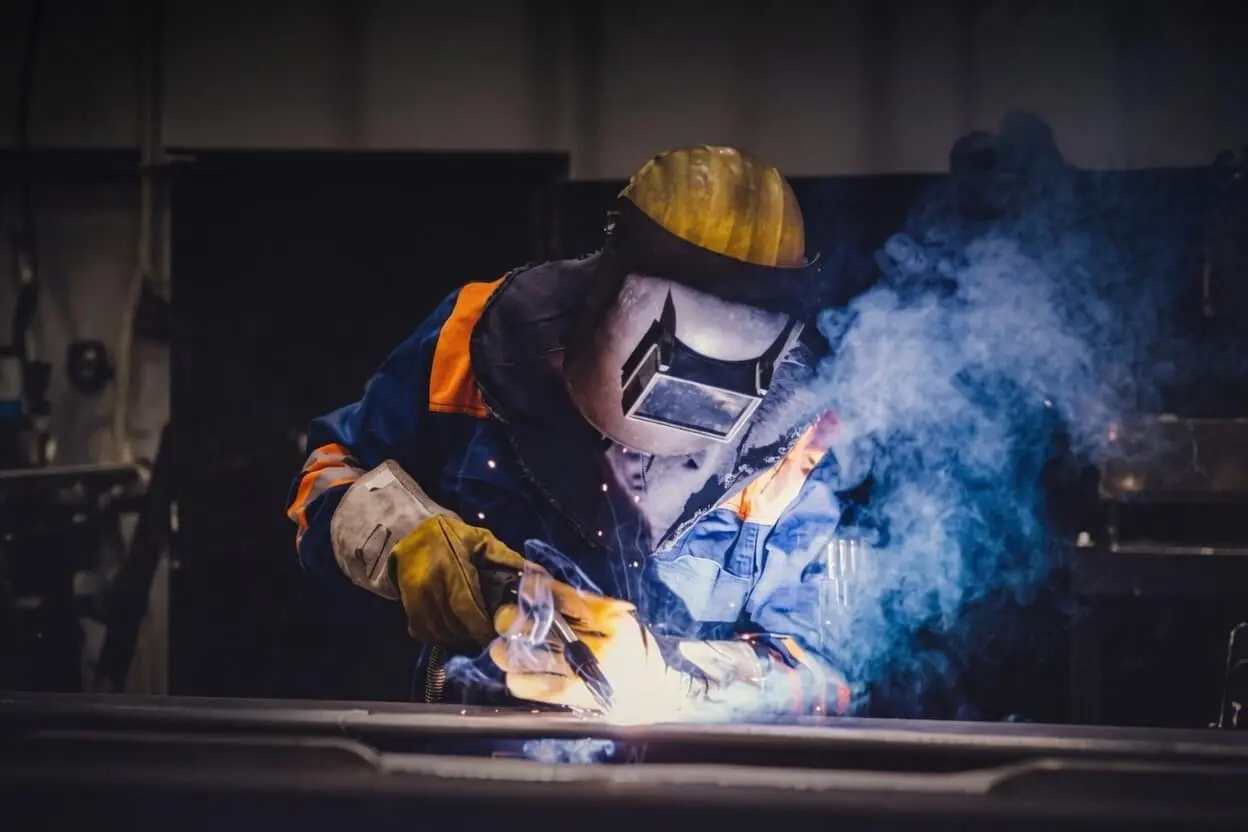
The Professional Welding (1G–4G, 6G, TIG & MIG) course is a comprehensive industry-focused training program designed to develop skilled welders capable of performing high-quality welding across multiple positions and processes. The program combines theoretical instruction with intensive practical workshop training, enabling students to produce strong, accurate, and defect-free welds according to international standards.
Throughout the course, students receive hands-on experience in Shielded Metal Arc Welding (SMAW), Tungsten Inert Gas (TIG), and Metal Inert Gas (MIG) welding. Training covers flat, horizontal, vertical, overhead, and advanced 6G pipe welding, preparing graduates for careers in construction, shipbuilding, pipeline installation, structural fabrication, manufacturing, and oil & gas industries.
Upon successful completion, students will possess the technical knowledge, practical expertise, and workplace safety skills required to pursue employment both locally and internationally.
- Welding Safety & PPE
- SMAW (Stick Welding)
- TIG Welding (GTAW)
- MIG Welding (GMAW)
- 1G Flat Welding
- 2G Horizontal Welding
- 3G Vertical Welding
- 4G Overhead Welding
- 6G Pipe Welding
- Pipe & Plate Welding
- Welding Symbols & Joint Types
- Electrode & Filler Metal Selection
- Welding Machine Setup
- Weld Inspection & Testing
- Welding Defect Identification
- International Welding Standards
- Workshop Project Training
- Mock Trade Test Preparation
Module 1: Introduction to Welding & Workshop Safety
The Welding Trade: Introduction to career paths and high-demand global job opportunities.
Personal Protective Equipment (PPE): Correct usage of welding helmets, leather aprons, gloves, and safety boots.
Workshop Safety: Fire prevention protocols, electrical hazard awareness, and proper ventilation systems to manage hazardous fumes.
Equipment Overview: Safe handling and operation of welding machines, power tools, and workshop accessories.
Module 2: Welding Fundamentals & Engineering Basics
Process Overview: Introduction to the core welding methodologies: SMAW (Stick), TIG (Gas Tungsten), and MIG (Gas Metal).
Electrical Principles: Understanding voltage, amperage, and electrical polarity ($AC$, $DCEN$, $DCEP$) in arc stability.
Materials Science: Introduction to base metals (Carbon steel, Stainless Steel, Aluminum) and proper filler metal/electrode selection.
Blueprints & Design: Reading standard welding symbols and preparing different joint designs (Butt, Lap, Tee, Corner, Edge).
Module 3: SMAW — Flat Position (1G)
Electrode Management: Selection, baking, and handling of basic and rutile electrodes (e.g., E6010, E7018).
Arc Mechanics: Striking the arc, maintaining the correct arc length, and controlling travel speed.
Bead Formation: Executing clean, uniform weld beads on flat carbon steel plates.
Troubleshooting: Identifying initial striking defects and mastering slag removal/interpass cleaning.
Module 4: SMAW — Horizontal Position (2G)
Horizontal Mechanics: Plate and pipe preparation for horizontal alignment.
Electrode Manipulation: Adjusting work and travel angles to combat gravity.
Weld Pool Control: Managing the molten puddle to prevent sagging or undercut on the top edge.
Inspection: Daily practical exercises followed by visual quality assessment.
Module 5: SMAW — Vertical Position (3G)
Directional Techniques: Master both vertical-up (for structural strength) and vertical-down (for thin sheet metal) welding.
Gravity Management: Techniques to keep the puddle from dropping out.
Bead Styles: Practicing weave beads vs. stringer beads to achieve optimal penetration.
Evaluation: Strict visual inspection for structural uniformity and sound root penetration.
Module 6: SMAW — Overhead Position (4G)
Advanced Safety: Specific safety protocols to handle overhead sparks and molten metal spatter.
Heat Input Management: Controlling amperage and travel speed to completely avoid “drop-through.”
Uniformity: Achieving a flat, well-fused bead profile against gravity.
Quality Check: Root and face inspection of overhead plate joints.
Module 7: Advanced Pipe Welding (6G Position)
The 6G Challenge: Introduction to welding a fixed pipe angled at $45^\circ$ — the gold standard for high-paying welder certifications.
Multi-Pass Sequencing: Detailed execution of the Root pass, Hot pass, Fill passes, and final Cap pass.
Pressure Piping: Specialized techniques required for oil, gas, and high-pressure steam lines.
Qualification Practice: Mimicking real-world industrial testing conditions.
Module 8: TIG Welding (GTAW — Gas Tungsten Arc Welding)
TIG Setup: Assembling torch components, collets, gas lenses, and setting up high-frequency machines.
Tungsten Preparation: Correct selection and precise grinding angles of tungsten electrodes.
Gas Shielding: Flow meter settings and purging procedures using pure Argon gas.
Exotic Metals: Practical hands-on training on Stainless Steel and Aluminum plates and pipes.
Module 9: MIG Welding (GMAW — Gas Metal Arc Welding)
MIG Setup: Wire spool installation, tension adjustment, and contact tip maintenance.
Parameter Tuning: Balancing wire feed speed (WFS) and voltage for short-circuit, globular, or spray transfer modes.
Gas Blending: Using $CO_2$ and Argon mixtures effectively based on metal thickness.
Productivity Practices: High-efficiency structural welding on mild steel plates.
Module 10: Weld Quality, Defects & Inspection
Visual Inspection: Learning how to act like an inspector using welding gauges.
Defect Identification: Root cause analysis and fixes for porosity, undercut, excessive spatter, lack of fusion, and cracking.
Testing Methodologies: Basics of Destructive Testing (Bend tests) and Non-Destructive Testing (NDT) like Radiography ($X$-ray) and Dye Penetrant ($DP$).
WPS Reading: Interpreting formal Weld Procedure Specifications used on industrial worksites.
Module 11: Practical Workshop Training & Simulations
Intensive Boot Camp: Hours of dedicated, supervised shop time to perfect all positions (1G through 6G).
Industrial Simulations: Working on mock-up structural frameworks and pipe manifolds.
Time-Bound Tasks: Completing welds under strict industry time limits to build stamina.
Mock AWS/ASME Tests: Pre-testing students to ensure they pass formal certification criteria.
Module 12: Industry Standards & International Codes
Global Codes: Introduction to AWS D1.1 (Structural Steel Code) and ASME Section IX (Boiler & Pressure Vessel Code).
Workplace Readiness: Jobsite hazard awareness, confined space protocols, and lockout/tagout procedures.
Exam Prep: Theoretical and practical coaching tailored for international employment exams (Middle East, Singapore, Malaysia).
Module 13: Final Assessment & Certification
Practical Exam: Multi-position welding test scored strictly under code requirements.
Theory Examination: Comprehensive written test covering safety, metallurgy, and symbols.
Graduation: Verification of scores and the EuroStar ETTC Certified Professional Welder Certificate distribution ceremony.
Meet Your Chief Welding Instructor

Md Anowar Hossan
Welding Instructor

Shamim Akand
Welding Instructor
Information
- Schedule :
Morning & Evening Batches
- Duration :
3–6 Months
- Training Type :
Theory + Practical Workshop
- Eligibility :
Minimum Age 18 Years (Basic Literacy Preferred)
- Course Fee :
Contact for Latest Fee
- Certification :
EuroStar ETTC Certified Professional Welder (1G–6G, TIG, MIG)
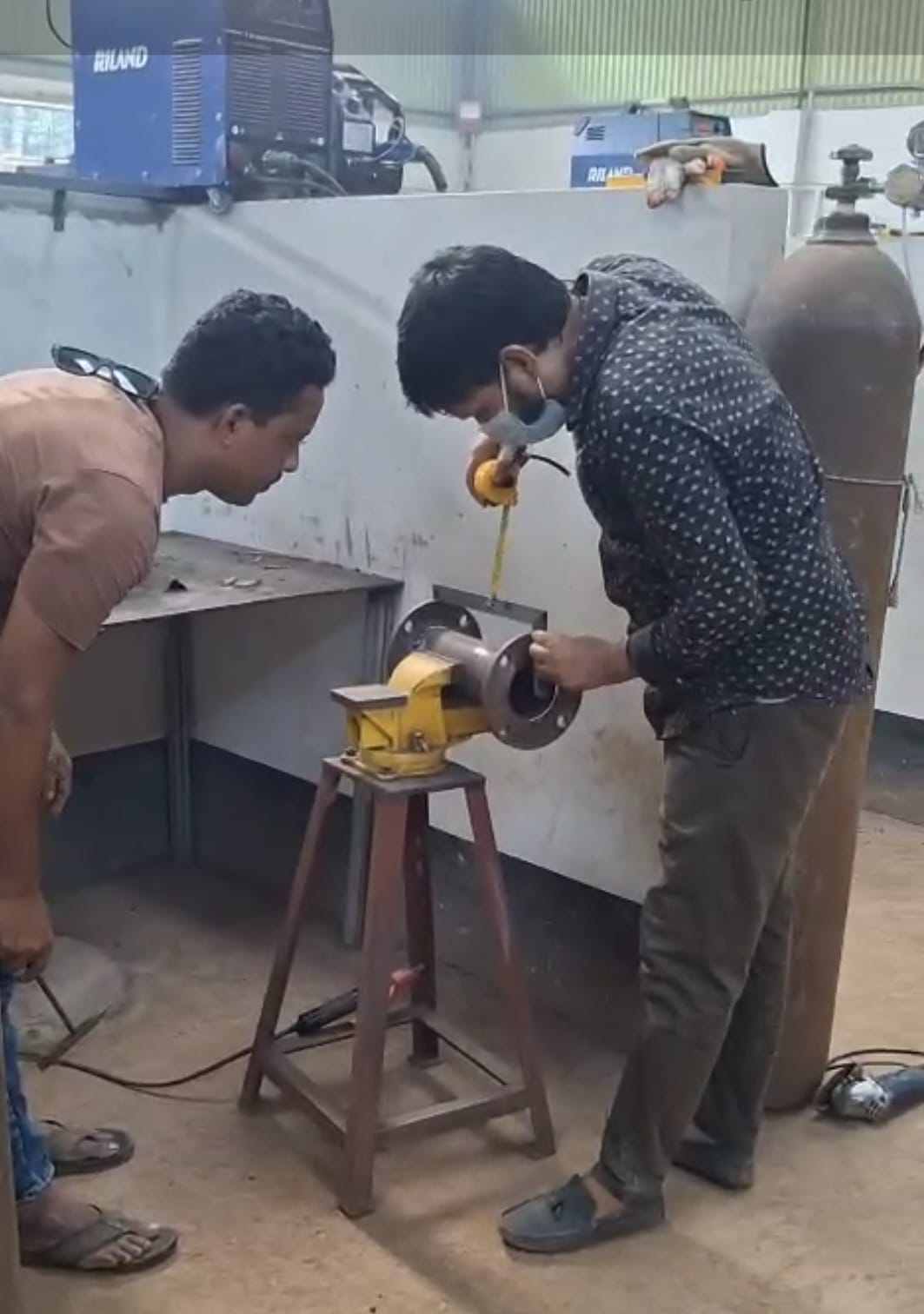
Inside Our Advanced Welding Training Lab & Workshop
Take a virtual tour of our industrial-grade welding booths, live student practical sessions, and high-precision structural test projects.
Find answers to frequently asked questions about our courses, admission process, training methods, and student support.
Got questions about our Welding Certification Program? Find quick answers about course modules, lab requirements, and international job opportunities below.
Q1: What is the difference between 1G-6G, TIG, and MIG welding covered in this course?
We offer professional technical and vocational courses designed to build job-ready skills for both local and international opportunities.
Q2: Do I need any prior experience to enroll in this welding program?
You can apply easily through our website or visit our office to complete the admission process.
Q3: Is the training fully practical or classroom-based?
Yes, after successful completion of the course, we provide recognized certificates.
Q4: Can I get an international job after completing this course?
Yes, our training programs are beginner-friendly and start from basic to advanced levels.
Q5: Do you provide job support?
We understand that you may have questions before joining our training programs. Below you will find answers to the most frequently asked questions to help you make the right decision and understand our services better.
Join our professional training programs and build the skills you need for a successful future.
We understand that you may have questions before joining our training programs. Below you will find answers to the most frequently asked questions to help you make the right decision and understand our services better.